1. Load audit
Up to 40 appliances: daily energy, essential-only energy, inverter standby, simultaneous AC load and the peak while a motor starts. Measured readings override estimates.
Digital download · Excel, Google Sheets, LibreOffice + PDF
Turn an appliance list and your local sun data into a clear specification for panels, batteries, inverter, charge controller and cable, before you spend money on equipment.
$19 USD · checkout opening soon
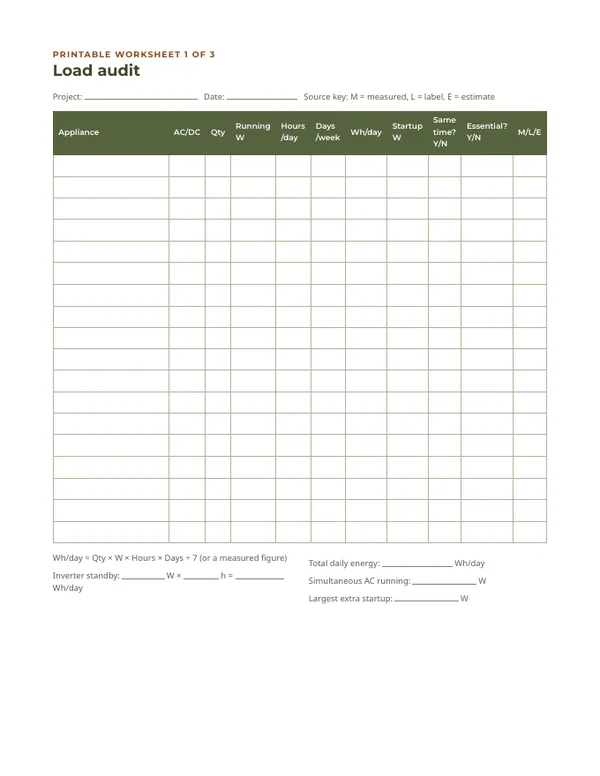
Not ready to buy? Download the free load audit worksheet (PDF).
People planning a stand-alone (off-grid) solar system for a cabin, homestead, workshop, tiny house or RV, who want to understand the numbers before comparing kits or talking to an installer. It suits a first system and a careful upgrade alike. You do not need to be an electrician, but you do need to be comfortable typing numbers into a spreadsheet.
It is a planning tool, not a design service. The finished design, protection and installation must follow your equipment manuals and local electrical code, and should be checked by a qualified, licensed electrician where the law or the risk requires it.
Up to 40 appliances: daily energy, essential-only energy, inverter standby, simultaneous AC load and the peak while a motor starts. Measured readings override estimates.
Twelve months of peak sun hours from PVWatts, PVGIS or Global Solar Atlas. Pick the months the system must cover; see the energy balance for every month.
Array watts from the design month, losses and reserve, rounded to whole panels, with the energy actually delivered in the worst month.
Required watt-hours and amp-hours, then a series and parallel layout for the batteries you are considering, and the days of storage it really gives.
Continuous and surge targets with pass/check against a chosen model, plus the DC current it can draw from the battery.
Charge current at full array output, cold-morning string voltage against the controller's limit, and PV current checks.
Smallest AWG meeting your drop allowance for each DC run, with a metric mm² minimum. Ampacity and protection are flagged as separate checks.
A one-page specification and every check in one place, ready to compare against kits and quotes.
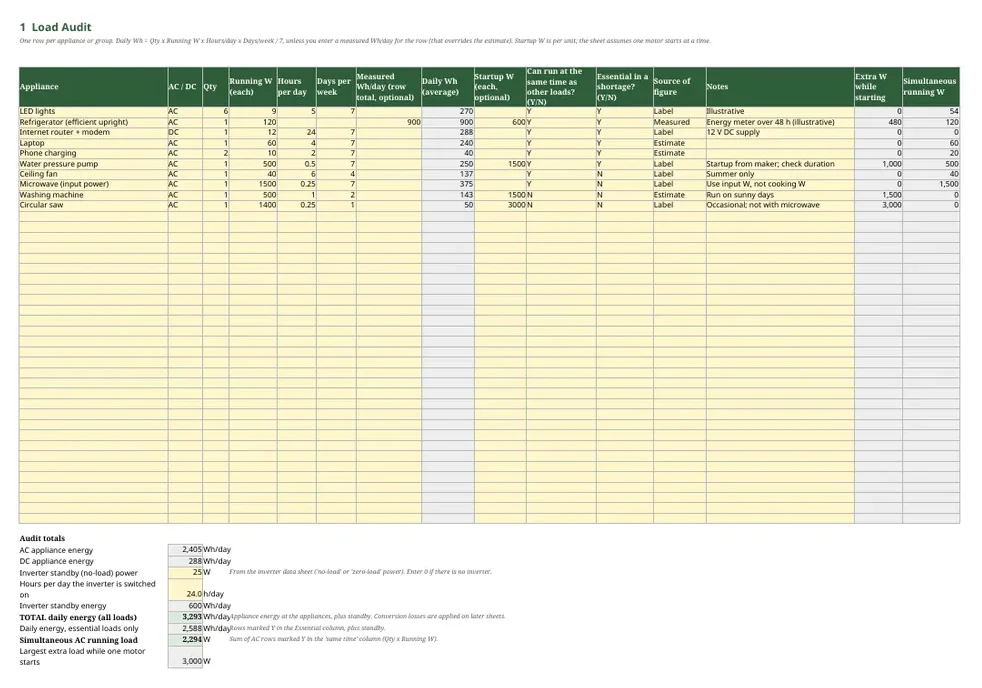
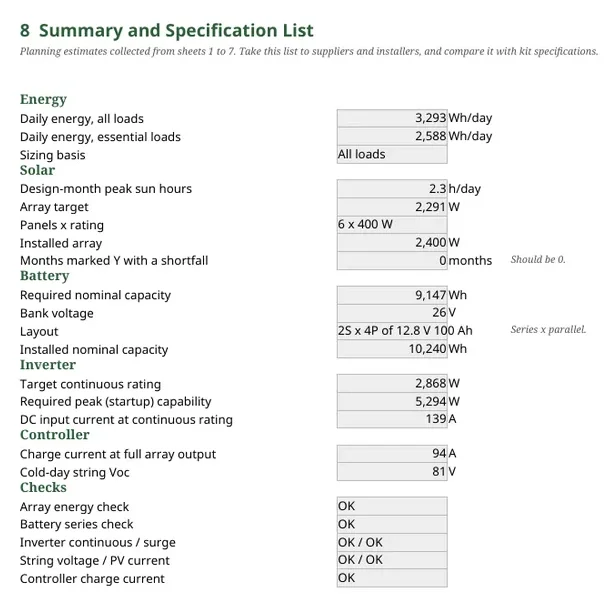
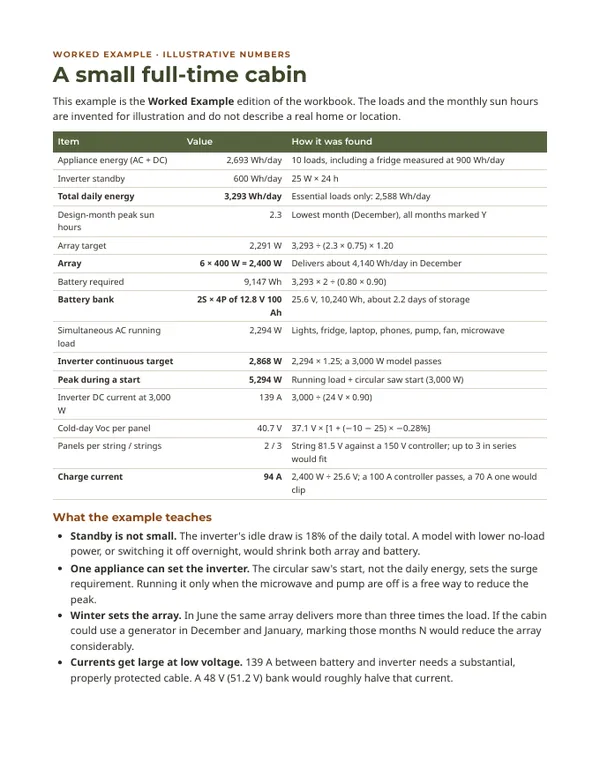
The worked example uses illustrative loads and sun hours; it does not describe a real home or location.
The free solar sizing calculator gives a quick first estimate from a single daily energy figure. The workbook builds that figure from an itemised audit, checks every month instead of one, lays out real batteries, checks inverter surge and DC current, catches cold-weather controller overvoltage and sizes cable for voltage drop. It also saves your project so you can revisit it when loads or prices change.
| You get | ZIP file: workbook (.xlsx, blank), workbook (.xlsx, worked example), guide (PDF, 14 pages, US Letter), README |
|---|---|
| Works with | Microsoft Excel 2010 or later, LibreOffice Calc, Google Sheets (upload to Drive and open with Sheets). Apple Numbers has not been checked. |
| Units | Watts, watt-hours, volts, amps; cable lengths in feet or metres; wire sizes in AWG with a metric mm² minimum |
| Version | 1.0, November 2026. Corrections are added to the store listing for existing buyers. |
| Delivery | Instant download after checkout |
| Licence | Personal or single-household use, including one property or one client project. Please do not resell or share the files. |
| Refunds | If the files do not open or do not match this description, contact us within 30 days for a refund. |
No. The workbook uses standard functions that work in Google Sheets and the free LibreOffice Calc.
The sizing method works anywhere; sun-hour sources cover most of the world. References to the National Electrical Code apply to the US. Elsewhere, follow your own wiring rules.
No. It produces a specification and a checklist so you can judge any kit or quote yourself. We do not sell equipment.
Yes. Our free guides cover the power audit and sizing method, and the free worksheet includes the load-audit pages from the guide.
$19 USD · checkout opening soon